If you are drawn to city living with character, Covington deserves a close look. This is a place where historic townhouses, riverfront mansions, loft apartments, and neighborhood business districts all exist within a compact urban footprint, which can make your home search feel exciting and a little overwhelming at the same time. The good news is that once you understand how Covington’s neighborhoods and housing styles fit together, it becomes much easier to spot what matches your lifestyle and goals. Let’s dive in.
Why Covington Feels Distinct
Covington covers 13.2 square miles and had an estimated population of 41,847 in 2025. The city also has an owner-occupied housing rate of 51.8%, a median gross rent of $1,006, and a long-standing identity shaped by preservation and older buildings.
That historic character is not a small footnote here. Covington has almost four dozen National Register listings and two National Historic Landmarks, which helps explain why so many neighborhoods feel established, layered, and architecturally interesting.
For you as a buyer or seller, that means Covington is rarely a one-style market. Instead, it is a city of compact urban districts, each with its own rhythm, streetscape, and mix of housing types.
Covington’s Urban Neighborhood Pattern
Covington’s in-town neighborhoods are better understood as a network of connected activity centers than as one uniform urban core. City materials point to MainStrasse Village, Ritte’s Corner in Latonia, Roebling Point, the 12th Street corridor, and downtown with spokes along Madison, Scott, Greenup, and Pike.
That matters because your daily experience can shift a lot from one area to the next. In some parts of Covington, you are surrounded by restaurants, storefronts, and steady foot traffic. In others, the feel is more residential, historic, and block-by-block.
If you are comparing options, it helps to think less in terms of "best" neighborhood and more in terms of best fit for how you want to live. Covington gives you several versions of urban living rather than just one.
MainStrasse Village: Classic Walkable Urban Living
MainStrasse Village is one of Covington’s clearest examples of a compact, walkable, mixed-use district. The West Side/MainStrasse historic district includes roughly 800 buildings and is known for narrow side yards, brick lanes, wrought-iron fences, and a strong mix of residential and commercial architecture from the late 19th century.
This area is often the easiest one to picture if you want an active neighborhood setting. Shops, restaurants, and bars are clustered closely together, and the built environment supports walking as part of everyday life rather than as an occasional outing.
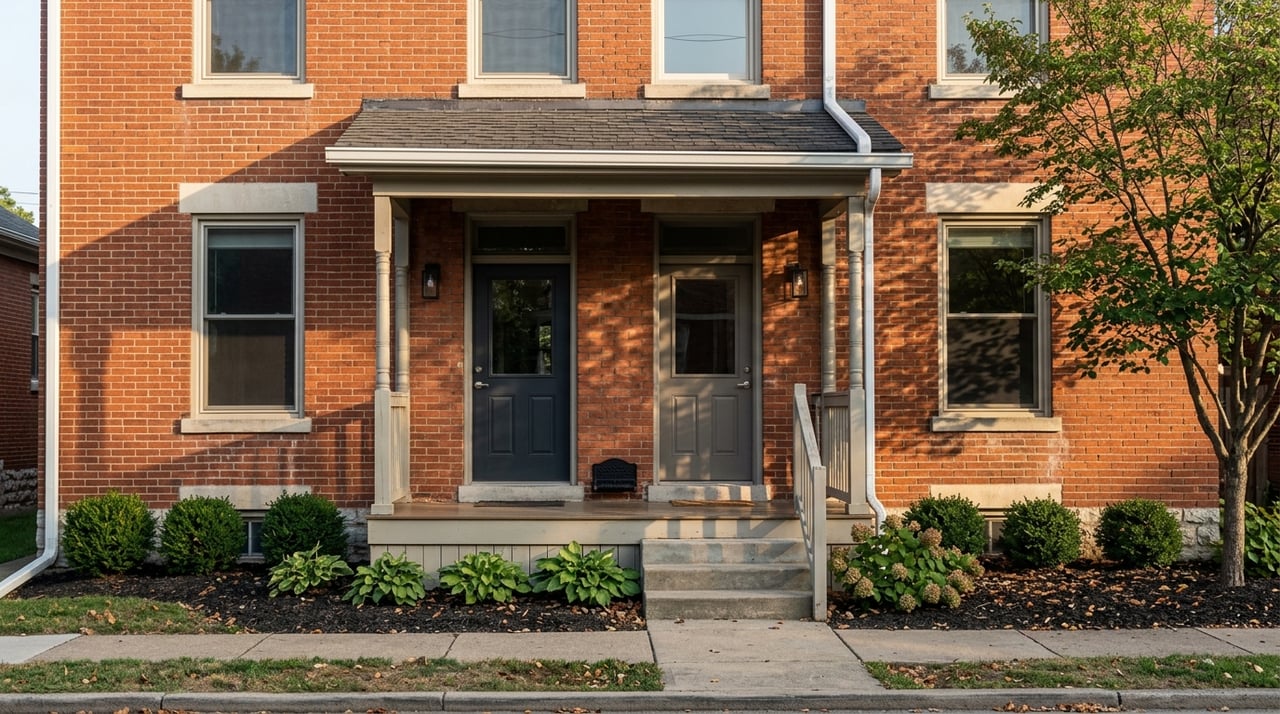
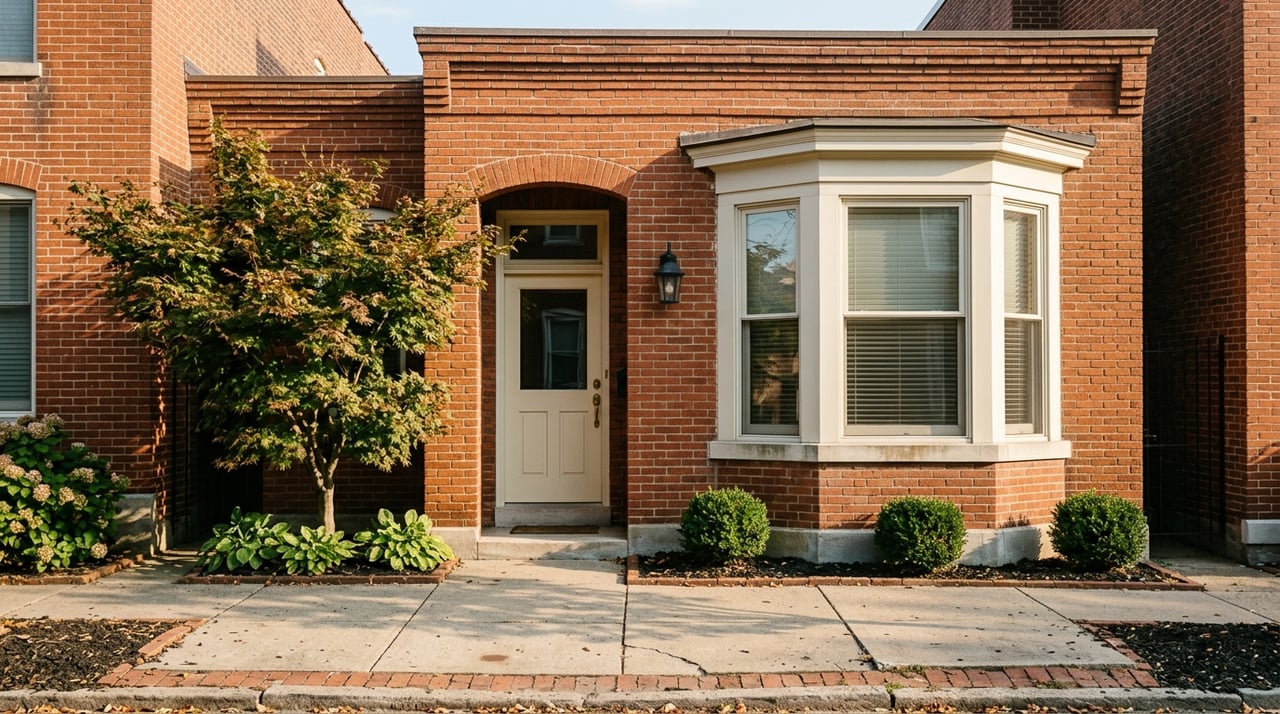
From a housing perspective, MainStrasse stands out for the Covington-Newport townhouse, a signature form that is usually two bays wide with a side entrance. You will also find Greek Revival, Gothic Revival, Second Empire, Queen Anne, Romanesque, and commercial buildings with stone and cast-iron storefront details.
If you love older homes and dense urban blocks, MainStrasse offers a lot of visual texture. It can be especially appealing if you want architecture with personality and a neighborhood where the street scene is part of the lifestyle.
Roebling Point and Downtown: Energy and Adaptive Reuse
Roebling Point and downtown form another major urban node in Covington. City materials describe Roebling Point as a vibrant and popular district, and public improvements in the area have focused on wider sidewalks, outdoor dining, and a stronger gateway into the city.
Downtown streetscape work has also aimed to make the area more inviting and walkable for residents, businesses, and loft apartment seekers. If you are looking for a more active, central feel, this part of Covington may be the first place you explore.
One of the most interesting parts of the downtown housing story is adaptive reuse. Former commercial and civic buildings have been converted into residential spaces, including projects like 303 Court, Landwehr Lofts, and SparkHaus.
That creates a different type of housing option than you might find in the city’s rowhouse and townhouse districts. If you are drawn to apartments, condos, loft-style living, or renovated spaces inside older buildings, downtown Covington gives you a strong version of that product.
Licking Riverside: Landmark Homes and Riverfront Character
Licking Riverside offers a different kind of urban experience. The neighborhood is bounded by the Ohio River, Licking River, Greenup Street, and Eighth Street, and it is known for river views, large sidewalks, transit connections, and a remarkable range of historic housing.
The architecture here is especially broad. City materials point to Federal, Greek Revival, Italianate, French Second Empire, High Victorian Gothic, bungalow, and Georgian Revival examples, along with rowhouses, apartments, coach houses, and garages.
If MainStrasse feels like a concentrated entertainment district, Licking Riverside feels more like a historic riverfront neighborhood with standout architecture. It was named one of the American Planning Association’s 2013 Great Neighborhoods, with recognition tied to its architecture, scenic setting, and civic activism.
This is also a place where adaptive reuse is part of the neighborhood’s identity. A hospital has been converted into condos, a school into senior housing, and many carriage houses into apartments or single-family homes, which shows how older structures continue to evolve over time.
Eastside, Helentown, Austinburg, and Wallace Woods
If you want a more residential setting without losing Covington’s historic character, Eastside, Helentown, Austinburg, and Wallace Woods are worth attention. These areas still reflect the city’s dense urban fabric, but the feel leans more toward residential blocks than concentrated entertainment corridors.
Helentown, for example, includes 840 buildings across 37 blocks with pre-1900 Greek Revival, Queen Anne, Italianate, and Colonial Revival architecture. That kind of building stock creates streets with a strong sense of continuity and architectural depth.
Recent city projects have also focused on traffic calming and improving pedestrian and bicycle safety in parts of Eastside and Helentown. For you, that can shape how comfortable and connected the neighborhood feels in everyday use.
These neighborhoods can be a great fit if you want classic architecture and an urban setting that feels a bit quieter than the busier restaurant and nightlife districts. They show another side of Covington, one rooted in residential density and historic streetscapes.
Latonia and Ritte’s Corner: Neighborhood Main Street Feel
Latonia, especially around Ritte’s Corner, offers a more local neighborhood-commercial experience. City reporting describes it as a hub for small retail and service-oriented businesses, with investment along nearby corridors.
This part of Covington can appeal to buyers who want some commercial convenience nearby but prefer a more everyday, neighborhood-centered atmosphere. It feels less like an entertainment district and more like a community business hub woven into the surrounding residential areas.
That distinction matters when you are deciding where to focus your search. Some buyers want the highest concentration of dining and street activity, while others want a mixed neighborhood feel that is still urban but more routine in its day-to-day pace.
The Housing Styles You’ll See Most
Covington’s housing stock is unusually broad for a city its size. Core styles identified in city design guidelines include Federal, Greek Revival, Italianate, Queen Anne, and Craftsman, and the region is noted for having one of the country’s largest collections of intact brick Italianate houses.
That gives the city a strong historic baseline. Even before you factor in infill, renovations, and conversions, Covington already offers a wide visual and structural range.
As you search, you may come across:
- Historic townhouses
- Rowhouses
- Bungalows
- Condos
- Loft-style apartments
- Traditional apartments
- Mixed-use buildings with upper-floor residences
- Reused civic or commercial buildings converted to housing
This is why a Covington home search often comes down to both property type and lifestyle. You are not just picking a location. You are choosing whether you want a townhouse block, a riverfront historic home, a loft conversion, or a residential street with older detached or attached housing.
What Buyers Should Keep in Mind
In Covington, older homes often come with both charm and complexity. Because preservation plays a meaningful role in the city’s identity and policy framework, original details may be paired with renovation limits or design guidelines in certain historic areas.
That does not mean you should avoid older housing. It means you should evaluate it carefully and understand what you are buying beyond the finishes and staging.
This is where a design- and construction-minded approach can really help. When you tour homes in Covington, it is smart to look at not only the style and atmosphere, but also the practical side of the property, including how previous updates may have changed the home and what future improvements may realistically involve.
A helpful way to compare options is to ask:
- Do you want walkable dining and nightlife nearby?
- Do you prefer a more residential block pattern?
- Are you drawn to a historic townhouse, rowhouse, bungalow, or loft?
- Would you enjoy a reused building with modern finishes in an older shell?
- Are you comfortable with the maintenance and decision-making that can come with older housing?
What Sellers Can Highlight
If you are selling in Covington, your home’s context matters almost as much as the home itself. Buyers are often responding to a combination of architecture, neighborhood feel, walkability, and the story of the block.
That means effective marketing should highlight the features that make the property fit its location. A MainStrasse townhouse, a Licking Riverside historic home, and a downtown loft conversion may all appeal to very different buyers, even if they are priced in a similar range.
It is also worth remembering that buyers in Covington may be especially tuned in to building character. Original brick, townhouse form, riverfront setting, adaptive reuse history, and proximity to neighborhood business districts can all shape how a listing is perceived.
Why Covington Appeals to Design-Minded Buyers
Covington is especially compelling if you see homes as more than square footage. The city’s neighborhoods offer a strong mix of architecture, urban form, and reuse, which gives you the chance to find a property with personality and long-term potential.
For design-minded buyers, that can be exciting. You may find a historic townhouse with preserved details, a loft in a converted commercial building, or a home in a residential historic district where the streetscape itself is part of the appeal.
For practical buyers, Covington also offers variety. You can compare active mixed-use areas, quieter residential blocks, and several housing forms without leaving the city.
That mix is what makes Covington stand out. It is walkable, historic, and still evolving, which gives buyers and sellers a market with real texture rather than a one-note experience.
If you are thinking about buying or selling in Covington, having a guide who can help you evaluate both the lifestyle fit and the bones of the property can make the process much clearer. To talk through neighborhoods, housing styles, and what to watch for in older or character-rich homes, connect with Laura Zembrodt.
FAQs
What kinds of homes are common in Covington, Kentucky?
- Covington includes historic townhouses, rowhouses, bungalows, condos, loft apartments, traditional apartments, and mixed-use buildings with upper-floor residences.
Which Covington neighborhoods feel most walkable and active?
- MainStrasse Village, Roebling Point, and downtown are among the areas most closely associated with concentrated dining, businesses, and walkable urban activity.
What makes Licking Riverside unique in Covington?
- Licking Riverside stands out for its riverfront setting, large sidewalks, transit connections, and a wide range of historic architecture, including mansions, rowhouses, apartments, and coach houses.
Are older homes a big part of the Covington housing market?
- Yes. Covington’s identity is closely tied to preservation and older building stock, with core styles that include Federal, Greek Revival, Italianate, Queen Anne, and Craftsman.
Does Covington have lofts or converted buildings for buyers?
- Yes. Downtown and nearby districts include adaptive reuse projects where former commercial or civic buildings have been converted into apartments, condos, or loft-style residences.
How should buyers compare Covington neighborhoods?
- A good starting point is to compare daily lifestyle, housing type, and building character, such as whether you want a busy mixed-use district, a riverfront historic setting, or a more residential neighborhood with classic architecture.