If you are thinking about buying a small investment property in Bellevue, KY, the numbers alone will not tell the full story. This is a small, older river city where layout, condition, parking, permits, and local rules can change a deal fast. If you want to evaluate a duplex, small multi, or single-family rental with more confidence, it helps to know what really matters here. Let’s dive in.
Why Bellevue stands out for investors
Bellevue is a compact city of about 5,847 residents packed into just 0.91 square miles. It sits across the river from Cincinnati and has a mix of older homes, small multifamily properties, and historic character that can appeal to buyers and renters alike.
That same charm also creates more homework. Bellevue includes the Fairfield Avenue and Taylor's Daughters historic districts, and many exterior changes in those areas require a Certificate of Appropriateness. In practical terms, this is not a market where you should assume every rehab will be simple or fast.
Understand Bellevue as a small-market play
One of the first things to know is that Bellevue is a thin-inventory market. Realtor.com reported only 38 homes for sale and 4 rentals in May 2026, which means comparable sales and rental comps may be limited at any given time.
That matters because pricing data can vary a lot by source. Zillow lists an average home value of $246,908 and average rent of $1,799, while Redfin reported a March 2026 median sale price of $227,500 and Realtor.com reported a May 2026 median listing price of $330,000 and median sold price of $299,999. Instead of relying on one headline number, you should underwrite Bellevue deals using a range and match each figure to its source and date.
Start with the right property type
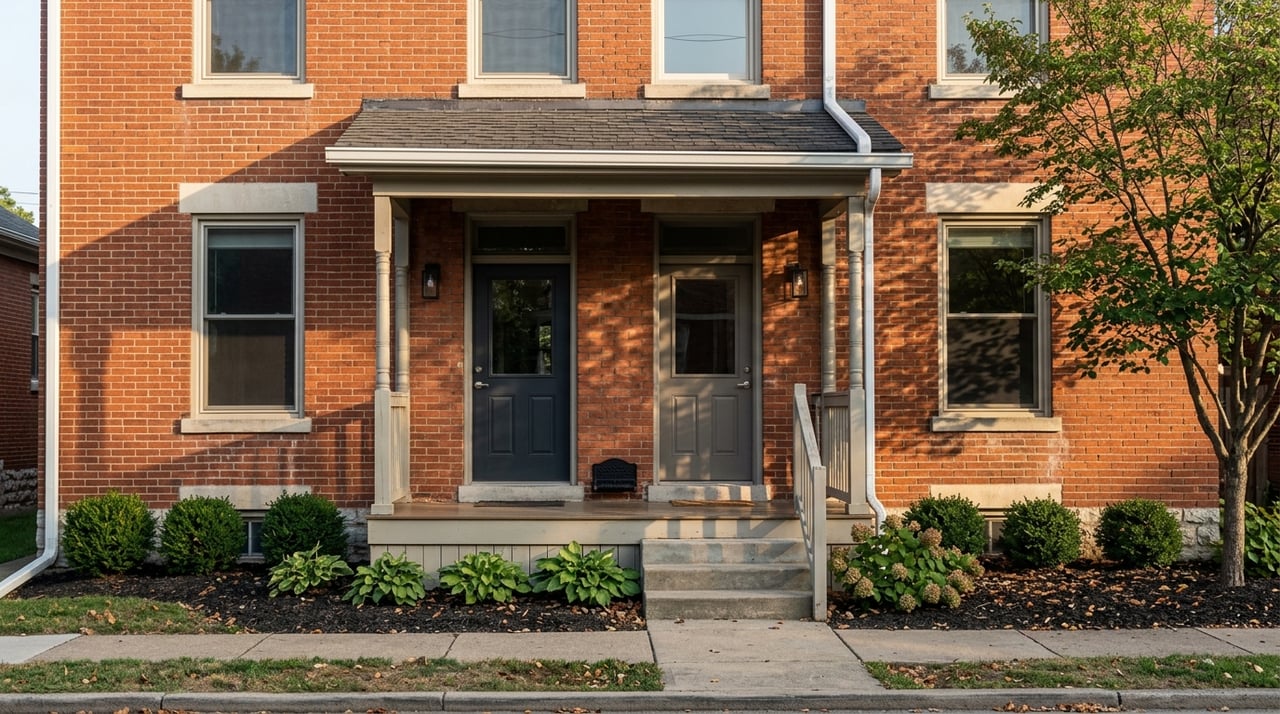
Duplexes and small multis
With duplexes and 2-to-4-unit properties, the basics matter more than many investors expect. Parking, efficient floor plans, and the condition of shared systems can affect both rentability and ongoing costs.
In Bellevue, those details matter even more because of the age of much of the housing stock. If the building needs exterior work and sits in one of the historic districts, your update plan may also involve extra approvals before work begins.
Single-family rentals and house-hacks
If you are looking at a single-family rental or planning to live in one unit while renting part of the property, focus closely on bedroom count and usable layout. In Bellevue, rent appears to track more clearly with unit size and function than with total square footage alone.
Zillow rental data for Bellevue shows about $1,245 for one-bedroom units, $1,850 for two-bedroom units, $1,799 for three-bedroom units, and $2,800 for four-bedroom units. That spread is a good reminder to verify how each bedroom functions in real life instead of assuming every finished room adds the same rental value.
Look beyond cosmetic updates
A fresh kitchen or new flooring can make a property look promising, but Bellevue investors should pay close attention to deferred maintenance. The city's code enforcement information says violations can lead to notices, citations, and liens.
The rental license application also states the city may inspect a building before issuing or renewing a license. It further notes that a license can be revoked if access is refused. That means condition issues are not just an inspection concern. They can directly affect whether you can operate the property as planned.
Why parking deserves a closer look
Parking is easy to overlook during a showing, but it should be part of your underwriting from day one. Bellevue's rental license application asks for the number of off-street parking spaces provided on the property.
That makes parking more than a convenience item. It is part of how the property is documented and evaluated. If you are comparing two similar properties, better off-street parking may make one easier to operate and market.
Know the historic-district rules early
Bellevue's historic preservation rules can influence both cost and timeline. The city states that buildings in the Fairfield Avenue and Taylor's Daughters historic districts require a Certificate of Appropriateness for most exterior modifications.
This is where a design-minded, due-diligence-first approach matters. A project that looks like a simple exterior refresh on paper may involve added review and approval before work can move forward. Before you count on a fast value-add plan, confirm whether the property falls within one of these districts and whether your planned changes trigger the approval process.
Build city costs into your numbers
Small recurring costs can still affect returns, especially on a property with tight margins. Bellevue's finance page lists a rental license fee of $40 per unit and a property tax rate of $0.364 per $100 of assessed value.
These may not be the biggest line items in your budget, but they should still be included before you compare projected cash flow. Leaving out local fees and taxes can make a borderline deal look better than it really is.
Kentucky law also requires security deposits to be held in a separate account and supported by move-in and move-out damage listings. That is an operating detail many newer investors miss, but it belongs in your management plan from the start.
Check zoning and permits before planning upgrades
Bellevue uses Campbell County Planning, Zoning, and Building Inspection for zoning matters and building permits. The city also notes that its zoning ordinance is online and that Article XXI governs the form-based code in T3, T4, T5, and T5.5 zones.
For you, the takeaway is simple: do not assume your renovation plan is allowed just because it seems minor. If your return depends on reworking parking, changing exterior elements, or making a layout more rentable, zoning and permit review should happen before you finalize the numbers.
Be careful with short-term rental assumptions
If your investment plan depends on short-term rental income, Bellevue has specific rules you need to understand. The city requires a permit, inspection, annual business license, liability insurance, and limits guest stays to 14 consecutive days.
Just as important, the property must be the owner's principal residence and occupied by the owner at least 183 days per calendar year. The ordinance also limits short-term rentals to attached or detached single-family homes, two-family dwellings, townhomes, and condominiums.
That means many investor-style Airbnb assumptions may not fit Bellevue's rules. If your exit strategy only works with full-time non-owner-occupied short-term rental income, you should revisit that deal carefully.
A simple Bellevue evaluation checklist
Before you move forward on a small investment property in Bellevue, review these items:
- Confirm whether the property is in the Fairfield Avenue or Taylor's Daughters historic district.
- Ask whether your planned exterior work requires a Certificate of Appropriateness.
- Verify current zoning, permit needs, and any parking requirements.
- Review the true bedroom count and how each room functions.
- Check the condition of shared systems in duplexes and small multis.
- Include rental license fees, property taxes, and inspection-related risk in your numbers.
- Use multiple sales and rental sources because inventory is limited and pricing ranges can vary.
- If considering a short-term rental strategy, confirm the property meets Bellevue's owner-occupancy and permit rules.
What smart underwriting looks like here
Bellevue can be a compelling market for small investors, but it rewards discipline more than guesswork. Official Census data shows a 70.1% owner-occupied rate, a median owner-occupied value of $206,500, and a median gross rent of $1,265. That points to a market with rental demand, but not one where every expensive renovation automatically pushes rents high enough to justify the cost.
The strongest Bellevue deals are often the ones where you buy the right layout, respect the age and rules of the property, and underwrite conservatively. In a small, older market like this, careful analysis usually matters more than chasing a best-case scenario.
If you want help evaluating a Bellevue duplex, rental, or house-hack opportunity, working with someone who understands both design potential and construction reality can make a big difference. Laura Zembrodt brings an architect-trained eye, investor-minded perspective, and practical due diligence to help you assess risk, spot upside, and move forward with confidence.
FAQs
What should you check first when evaluating a Bellevue investment property?
- Start by confirming the property type, layout, parking, overall condition, and whether it is located in one of Bellevue's historic districts.
How do Bellevue historic districts affect a rehab project?
- If the property is in Fairfield Avenue or Taylor's Daughters, most exterior modifications require a Certificate of Appropriateness, which can affect cost and timeline.
How reliable are Bellevue rent and price comps?
- Bellevue is a small market with limited inventory, so sales and rental data can vary by source and date. It is smart to use a range instead of one number.
What local costs should you include in a Bellevue rental analysis?
- Include Bellevue's $40 per-unit rental license fee, the city's property tax rate of $0.364 per $100 of assessed value, and realistic maintenance and inspection-related costs.
Can you use a Bellevue property as a full-time short-term rental?
- Bellevue's short-term rental ordinance requires the property to be the owner's principal residence and occupied by the owner at least 183 days per year, so not every property will qualify for that strategy.