Anderson Township is building homes again. Its September 2026 township update lists ten subdivisions with homes under construction, from 11 lots at Meadows of Mt. Carmel to 48 at Parkside Estates. Prices advertised in mid-November 2026 put most of the for-sale homes well above $600,000. The township's own draft Comprehensive Plan says the housing type residents asked for most is something smaller. If your budget sits below that new-build floor, your way into the township is a house built during the 1960s, 1970s or 1980s. The thing to price carefully is that house's next twenty years, and the list price is only part of it.
What the Builders Are Advertising
Here is what builders and leasing offices were advertising in mid-November 2026 for six of the communities on the township's under-construction list.
| Community | Builder | Location | Advertised in mid-November 2026 |
|---|---|---|---|
| Meadows of Mt. Carmel | Drees | Mt. Carmel area | $598,400 to $707,400; 1,863 to 3,461 sq. ft. |
| Linden Hill | Traditions Building Group | 6753 Salem Rd., east of Birney | From the $690s; one-story designs, 1,700 to 4,000 sq. ft. |
| Nagel Village | Zicka Homes | Nagel Rd. at Pineterrace | "$700+"; patio-style, low-maintenance |
| Villas of Cross Creek | Zicka Homes | West side of Wolfangel Rd. | From the $800s |
| Reserves of Anderson | Redknot Homes | Four Mile Rd. | From $900,000; 3,500 to 5,500 sq. ft. |
| Anderson Grove (Eight Mile Townhomes) | Leasing community | 1267 Eight Mile Rd. | For rent, from $2,400 a month |
Anderson Valley on Markley Road, Parke Place on the north side of Ayers Road, Carriages at Coldstream on the south side of Ayers, and Parkside Estates at Hopper and Innisfree are the other four developments on the township's list.
For comparison, the REALTOR Alliance of Greater Cincinnati reported a median sale price of $309,000 for October 2026 across its five-county region. That number covers the whole metro, not Anderson. It still shows how far above a typical regional sale the township's least expensive new detached home starts. The newest homes in Anderson cost close to twice what a typical house across Greater Cincinnati sold for last month.
Who the New Homes Are Designed For
Look at the floor plans and the target buyer comes into focus. At Linden Hill, Traditions Building Group builds one-story designs with first-floor primary suites, and lawn and landscape maintenance is covered by a monthly fee. Zicka describes Nagel Village as detached patio-style homes for low-maintenance living. Even Drees, which markets Meadows of Mt. Carmel to families, has a one-story plan, the Beachwood, with a first-floor primary suite.
At these prices, with these features, the likeliest buyer already owns a home and has equity to bring. In many cases that person owns a house in Anderson. The township's draft plan says focus-group participants "noted that many empty nesters want to downsize while remaining homeowners but have limited ownership options that fit that next stage of life." A first-floor-primary villa on Salem Road is aimed squarely at that owner.
This matters to a buyer from out of town because of what follows. When a long-time owner moves into a new villa, the house they sell goes back on the market, and that house usually belongs to the township's main generation of housing. New construction in Anderson adds homes at the top of the price range. Its effect on supply for everyone else runs mostly through the older stock that move-down buyers sell.
The Older Stock Is the Main Market
The draft Comprehensive Plan is direct about what Anderson is built from. More than nine in ten housing units are single-unit homes, and "much of Anderson's housing was built during the suburban growth decades of the 1960s through the 1980s." The plan also puts the 2024 homeowner vacancy rate at 0.2% and says a resident who wants a smaller home, or a first-time buyer looking for a more attainable entry point, "may have few options without leaving the Township."
The public input gathered for the plan points the same way. In the sticker exercise on which housing types people wanted more of, smaller starter homes on smaller lots drew about 35% of the stickers. Housing for residents 55 and older and larger single-family homes each drew 18%. The plan describes those results as a snapshot and says they are not a statistically representative survey. Even so, the request was clear, and every for-sale community in the table above starts near $600,000 or higher.
The draft also names the costs that come with the older houses. It says they "increasingly require maintenance, accessibility improvements, energy upgrades, and reinvestment." Focus-group participants raised competition from investors and cash buyers. Put those together and the decision looks different from the portal version. A buyer below the new-construction floor is competing, sometimes against cash, for a house built decades ago, with very few alternatives available. The useful question is what that house will need, and whether its price leaves room for it.
Reading a 1960s to 1980s House as a Price
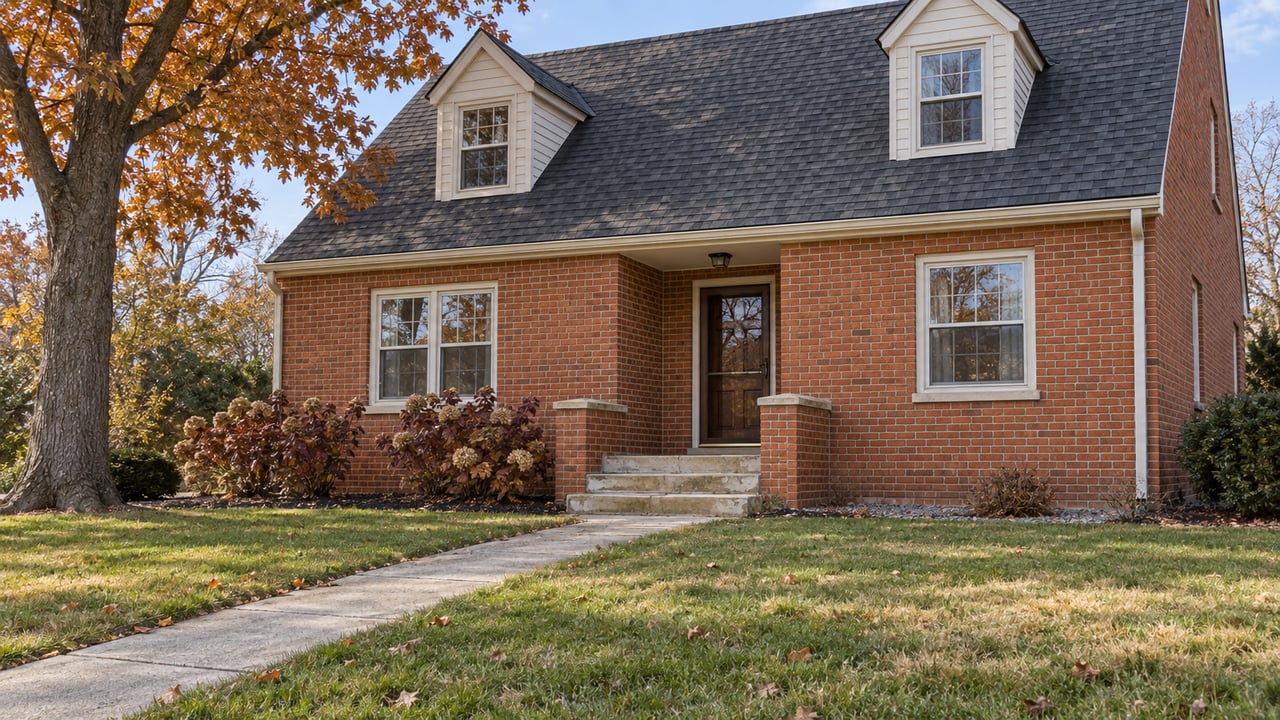
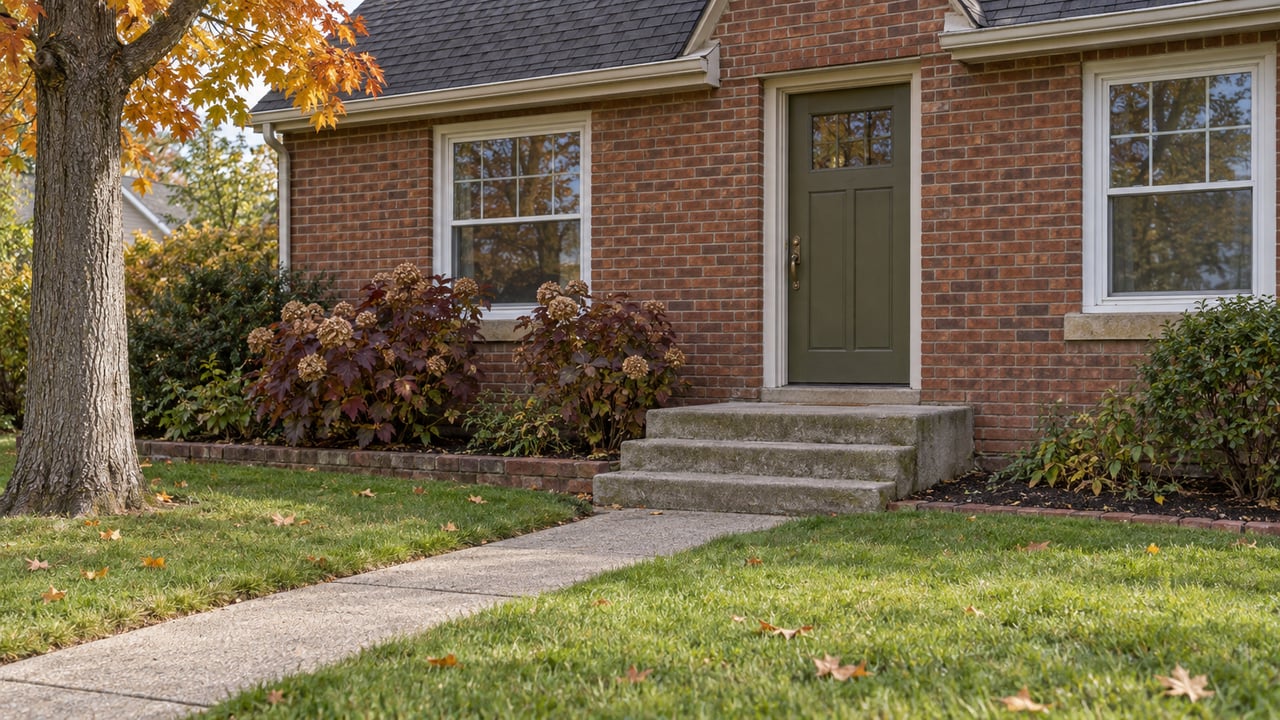
Time spent as an architect changes how I tour a house like this. A split-level from the 1970s and a new Drees plan can have similar square footage, but they are different products. The new home's price covers a building with nothing deferred. The older home's price covers a location, a lot and a structure, and the buyer's own budget covers the gap between that structure and how they want to live in it.
The plan's list of needs makes a practical way to walk an older Anderson house. Maintenance means the roof, windows and mechanical systems, and whether the furnace and water heater are near the end of their service life. Accessibility often means the floor plan: in a split-level or two-story colonial, can a bedroom and full bath work on the main level later if they're needed? Energy upgrades are about insulation, windows and ductwork in a house designed before current standards. A dated kitchen is mostly a finish choice. A house where all three of those categories are due at once is a different purchase, even when the listing photos look the same.
This is also where an older house can come out ahead. A buyer who can tell cosmetic age from system age can sometimes win a well-built ranch whose only real problem is its finishes. Neighborhoods like Turpin Hills, where development started in spring 1956 and spread outward through the 1960s and 1970s, show how varied this stock is from street to street.
What Is Changing Around the Older Neighborhoods
The township is investing in the areas where most of these homes stand. The September 2026 update reports sidewalk construction on Clough Pike from Harmony to Copperleaf, with left-turn lanes at Clough and Newtown, and a pedestrian-activated signal at Endovalley and Juilf's Park completed in fall 2025. Hills Properties' 224-unit Anderson Center Station apartment community opened in December 2025 and was more than 90% occupied by that update. Improvements at the I-275 and Five Mile interchange are planned for 2027.
The Comprehensive Plan is the piece to follow over the next month. WCPO reported on Nov. 12 that the 208-page draft makes housing one of its biggest focuses. In the same report, Sarah Donovan, the township's assistant director for planning and zoning, said that when developers bring a proposal, "we look at the comprehensive plan and say, 'Hey, does it match the community's vision for the future.'" The draft's recommendations include starter homes, accessory dwelling units, attached and middle housing, condominiums, and smaller single-floor, lower-maintenance options. According to the township's review notice, trustees are expected to consider the plan on Dec. 17. The plan will shape which proposals come forward next, and the homes already on Anderson's streets remain the main market for buyers in 2026 and 2027.
A Few Direct Questions
Is Anderson Township's new Comprehensive Plan in effect? Not yet. It is a draft dated Oct. 26, 2026, and trustees are expected to take it up on Dec. 17.
Are all of the new Anderson communities for sale? No. Anderson Grove, the townhome community at 1267 Eight Mile Road, is leasing three-bedroom, 2.5-bath townhomes of 1,760 square feet, with rents starting at $2,400 a month.
If I own an older Anderson home and I'm thinking about one of the new villas, where do I start? Start with the value of the house you would be selling. Your equity sets which of the new communities fit, and your house is the kind the township's next buyers are looking for. The home valuation page is a good first step.
If you're deciding between a new home in one of these Anderson subdivisions and a 1970s house on an established street, I'll walk through both with you and show you what the older one is likely to need before you write an offer. That comparison is where my architecture background pays off for a buyer. Laura Zembrodt can help you price the house and the work it needs together. Schedule a Consultation.